Heat Safety for Seniors: How to Protect Older Adults During a Heat Wave
Extreme heat can be dangerous for seniors, especially older adults who live alone, have chronic health conditions, take certain medications, or lack reliable air conditioning. This heat wave safety guide explains what caregivers, adult children, and neighbors should look for, and how to help prevent heat exhaustion and other heat-related illnesses.
When summer temperatures climb, heat safety for seniors becomes more than a seasonal concern; it can be lifesaving. Checking on an older loved one or neighbor during extreme heat is one of the most important steps caregivers, adult children, and community members can take.
The risk is real. A Harvard University study published earlier this year found that heat waves were associated with about nine additional deaths per 100,000 older adults each year, adding up to more than 17,000 deaths between 2000 and 2018.
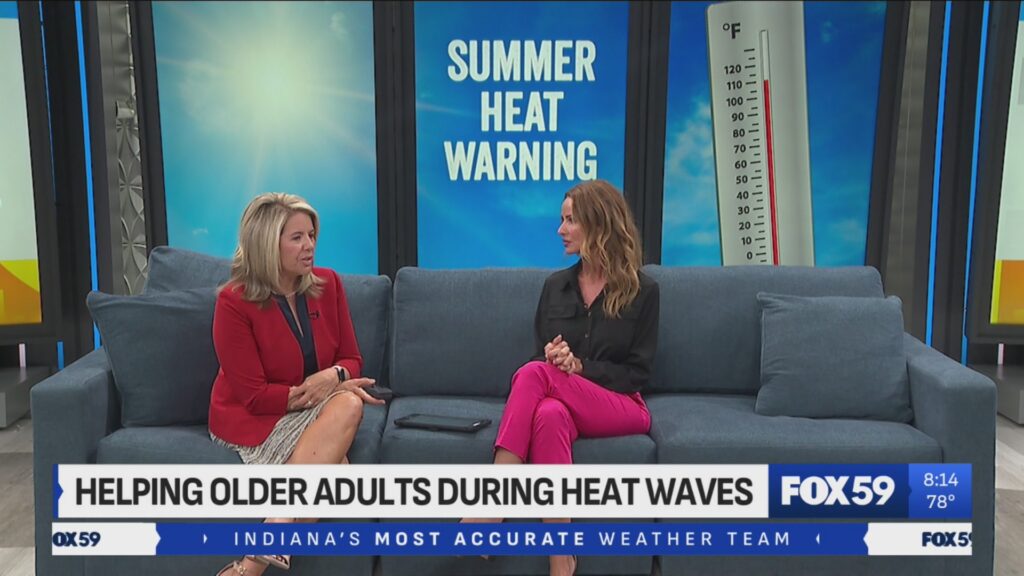
Stacey Gallardo from Traditions Senior Communities appeared on the FOX59 Morning News on Friday to discuss the importance of keeping seniors safe during dangerous heat waves.
Why Extreme Heat is Dangerous for Older Adults
Heat exhaustion in older adults happens when the body loses too much water and salt, often after prolonged exposure to high temperatures. For seniors, the danger can build quickly because the body’s natural cooling systems may not work as efficiently as they once did.
Changes in blood circulation and sweat glands can make it harder to cool down. Other factors—including obesity, being overweight or underweight, recent weight changes, cardiovascular disease, lung disease, kidney disease, certain medications, and a lack of air conditioning—can further increase risk.
How to Check on Seniors During a Heat Wave
Seniors who live alone are particularly vulnerable during a heat wave. A quick phone call helps, but an in-person visit can reveal much more. Come with kindness and curiosity and use the visit to quietly observe whether the home is cool enough, whether fresh food and water are available, and whether daily routines seem safe.
Heat Wave Checklist for Caregivers and Family Members
- Check the refrigerator. If they drink bottled water, notice how many bottles are available and whether they appear to be drinking enough. Look for fresh foods with high water content, such as melon, fruits, and vegetables. Spoiled or untouched food may be a sign that heat is affecting appetite or daily routines.
- Feel the temperature inside the home. Is the air conditioning working? Are fans on? Does the home feel warm or stuffy? If the home is uncomfortably hot, help identify a cooler place to spend time, such as a family member’s home, a community center, a library, or another air-conditioned setting.
- Notice changes in routine. Does it look like they are living within a few feet of a favorite chair? Piled-up laundry, neglected rooms, excessive sleep, or unopened mail may point to isolation, fatigue, or difficulty managing daily needs during severe weather.
Signs of Heat Exhaustion and Heat-related Illness in Seniors
Watch for warning signs of heat exhaustion or heat-related illness in seniors, including dizziness, headache, muscle cramps, nausea, unusual fatigue, weakness, confusion, or vomiting. If someone shows symptoms, help them move to a cooler place, encourage fluids if they can drink safely, and seek medical care if symptoms do not improve quickly. Confusion, fainting, or worsening symptoms should be treated as an emergency.
Build a heat safety support network for older adults
Adult children and caregivers cannot always be nearby, especially during a prolonged heat wave. Ask trusted neighbors, friends, church members, or other community contacts to check in regularly. A second set of watchful eyes can make a meaningful difference.
How Senior Living Support May Help During Extreme Heat
If living conditions are no longer safe or supportive, it may be time to talk about additional help or a change in living situation. Senior living communities can provide air-conditioned spaces, regular wellness checks, hydration support, meals, activities, and social interaction—important safeguards for older adults during extreme heat and year-round.
The seniors in our families and neighborhoods have helped create the communities we enjoy today. During dangerous heat, we owe it to them to pause, knock on the door, make the call, and ask one simple question: “How can I help?”
Related Articles